

Waste-gas systems that
use less power·prove it
keep improving
From high-efficiency drive and direct transmission to demand-based airflow, aerodynamic efficiency and data-driven O&M — a system that removes the losses conventional fans quietly accumulate year after year.
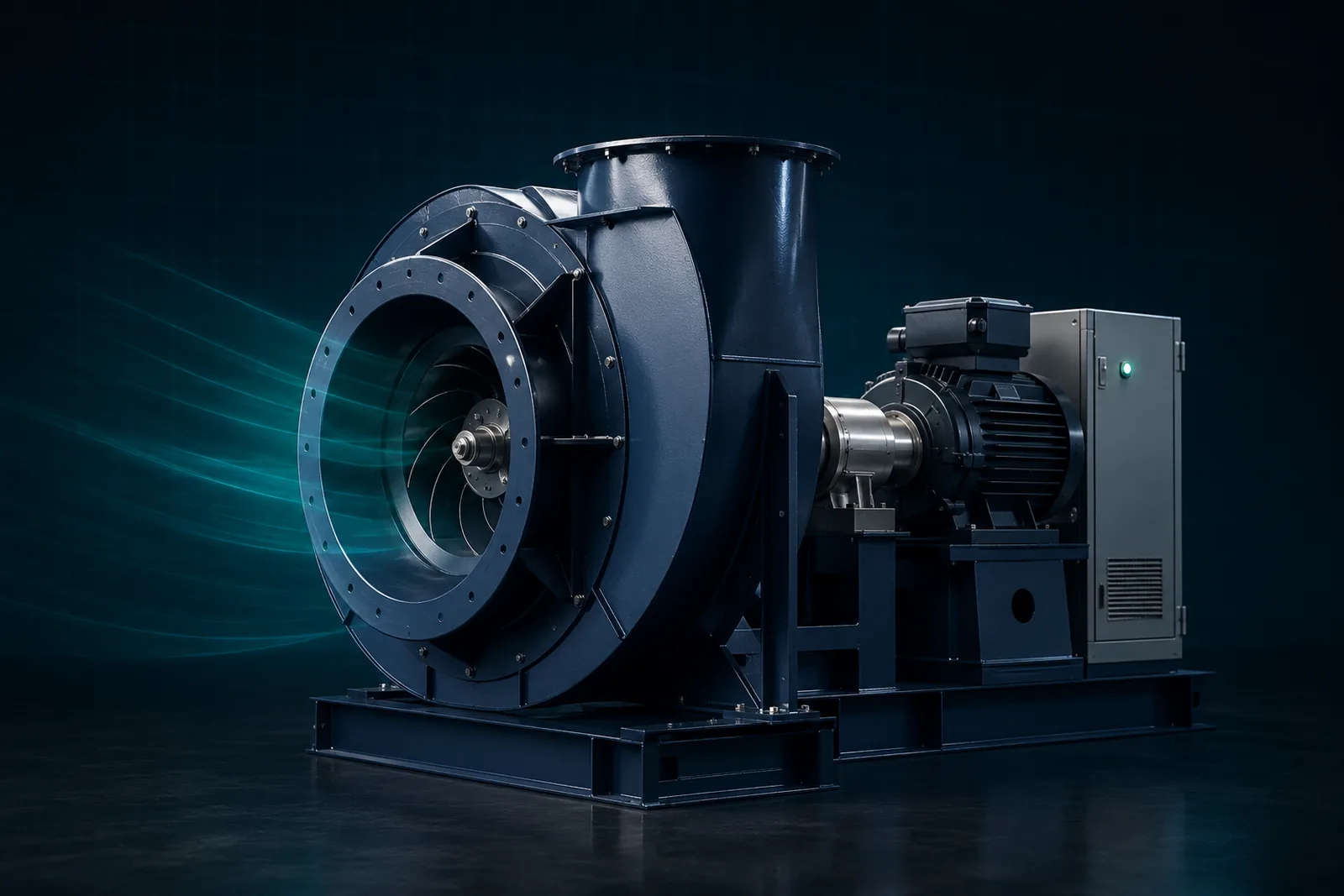
On a fan that runs year-round, the waste rarely stops at the motor
Between electrical input and useful airflow, a conventional belt-driven fan leaks energy at five separate points. Hover an amber branch or a row to see each loss and how it is addressed.
Power is lost before it ever reaches the impeller — and belts mean recurring replacement and downtime.
The fix: direct drive →From electrical input to useful airflow, loss removed at every stage
These four technologies aren't standalone features — they form a closed loop along the energy path, with data-driven O&M making the result measurable and continuously improvable.
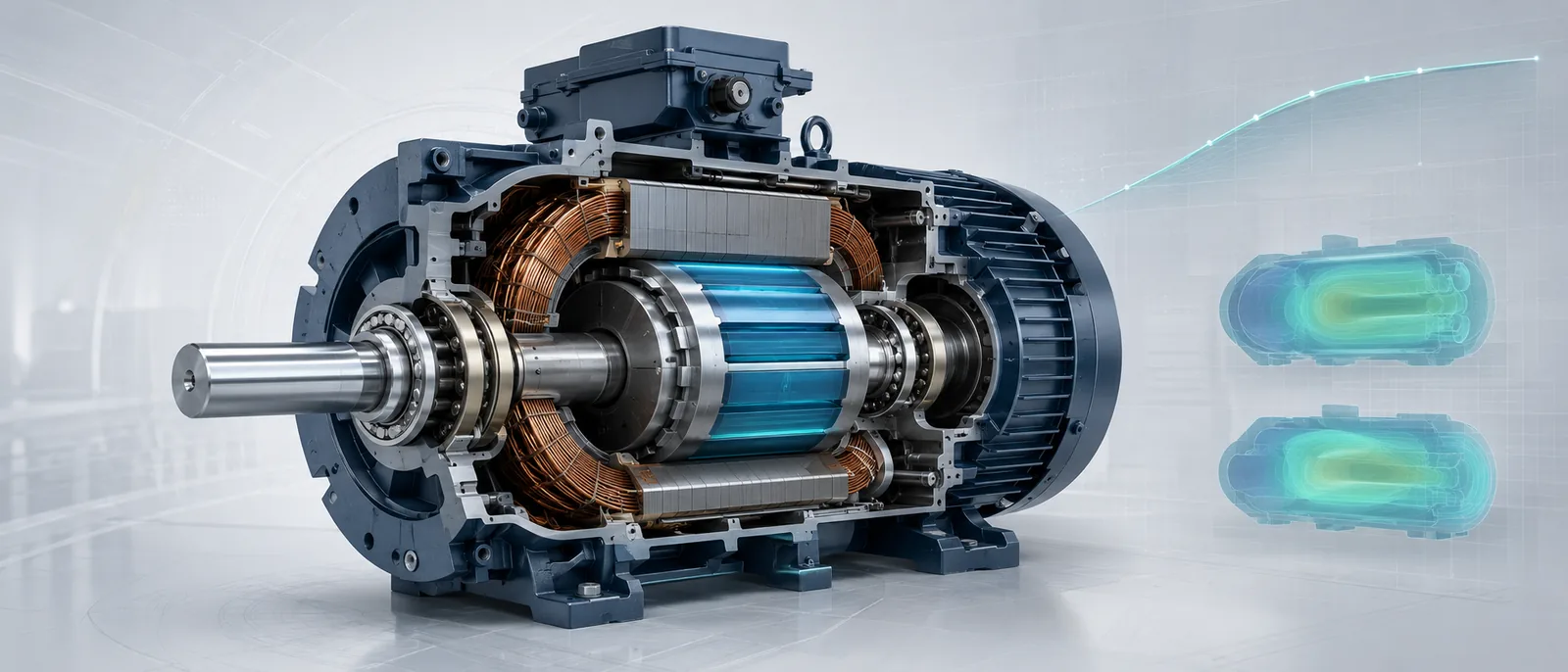
A permanent-magnet rotor replaces induction excitation, holding high efficiency across a wide load range — no sharp drop-off at part load, less energy under varying conditions.
How it worksA permanent-magnet rotor replaces induction excitation, holding high efficiency across a wide load range — no sharp drop-off at part load, less energy under varying conditions.
The motor couples straight to the impeller, eliminating belts and pulleys — less transmission loss, and the most common wear part is gone.
Closed-loop control of speed, flow and pressure against actual conditions — a small drop in speed can mean a much larger drop in power.
An optimised flow path cuts vortices, shock and duct losses — so static pressure goes into treatment, not turbulence.
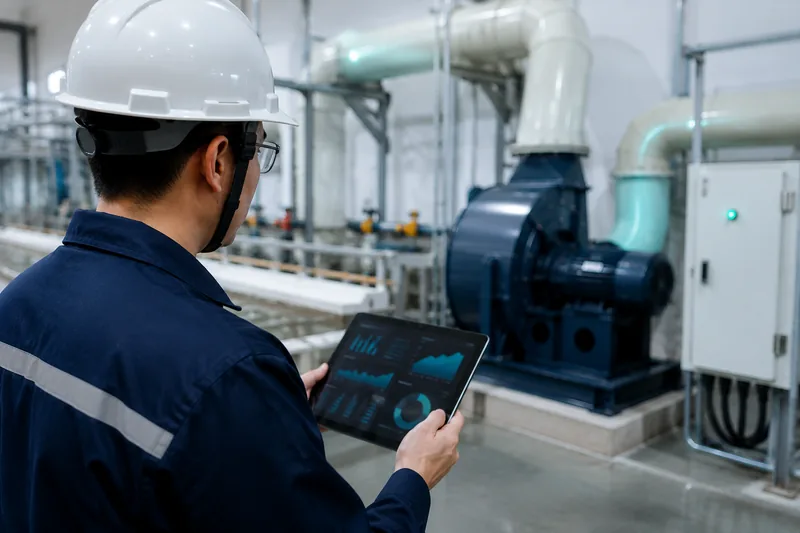
24/7 status and data monitoring makes savings measurable and traceable — the retrofit keeps proving and improving itself.
Each stage contributes differently depending on operating conditions; the combined effect is not a simple sum of individual figures
Not a replacement fan — an upgraded system
Belts wear out, frequent downtime · no data · the energy baseline
Less maintenance · some local data · partial saving
Early alerts cut downtime · 24/7 monitoring, savings measurable
Do the maths first, then decide whether to retrofit
Enter your site's basic parameters for an instant estimate. Leave a contact and we'll follow up with a detailed assessment based on a site survey.
No more black-box operation
From “fix it when it breaks” to “warn early, let the data speak” — savings you can measure and track, not just claim.
A solution and a reference case for your industry
Swipe to browse all six industries →
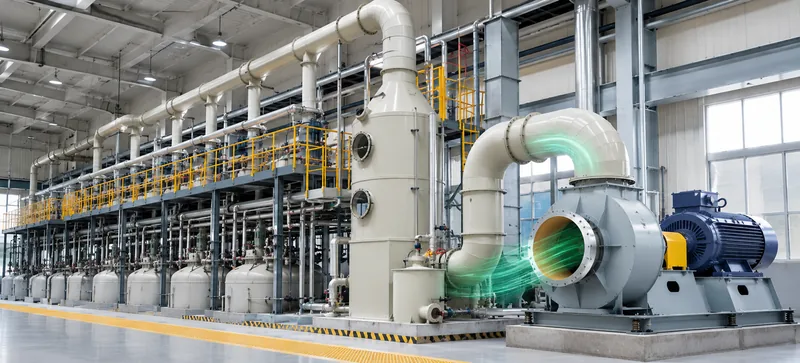
Key requirement: Corrosion resistance · continuous duty
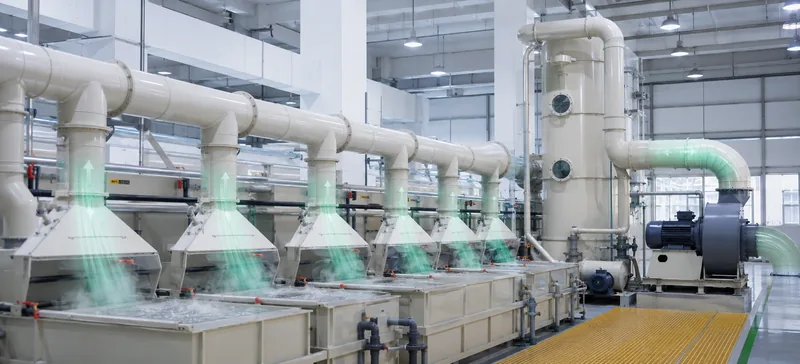
Key requirement: Corrosion-resistant materials · stable airflow
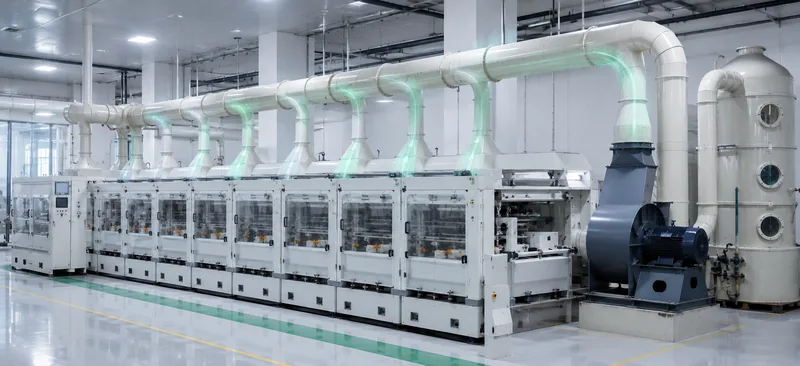
Key requirement: Clean exhaust · adapts to load swings
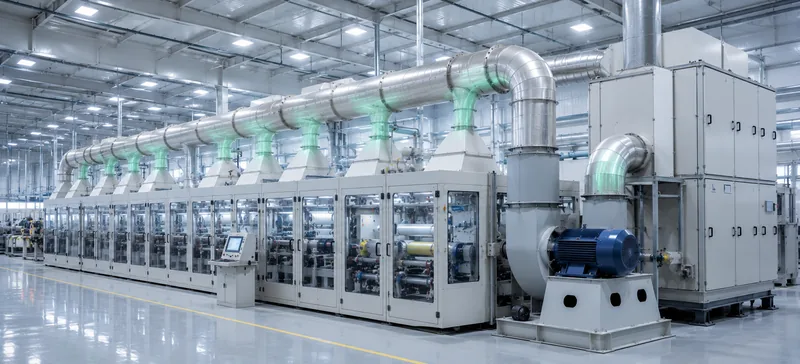
Key requirement: Stable process exhaust · data integration
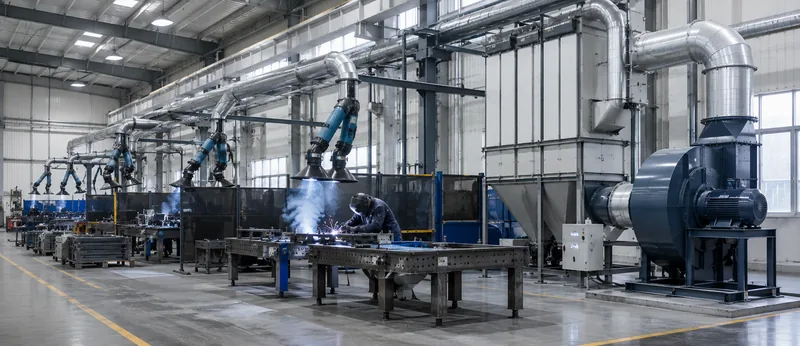
Key requirement: Dust-tolerant · low maintenance
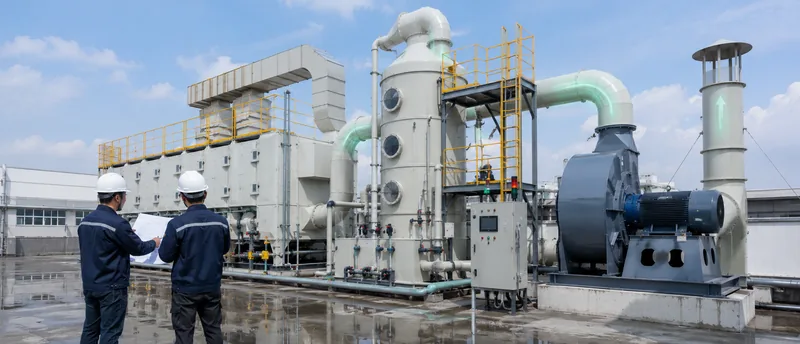
Key requirement: Competitive proposals · delivery support
Savings proven by before-and-after data
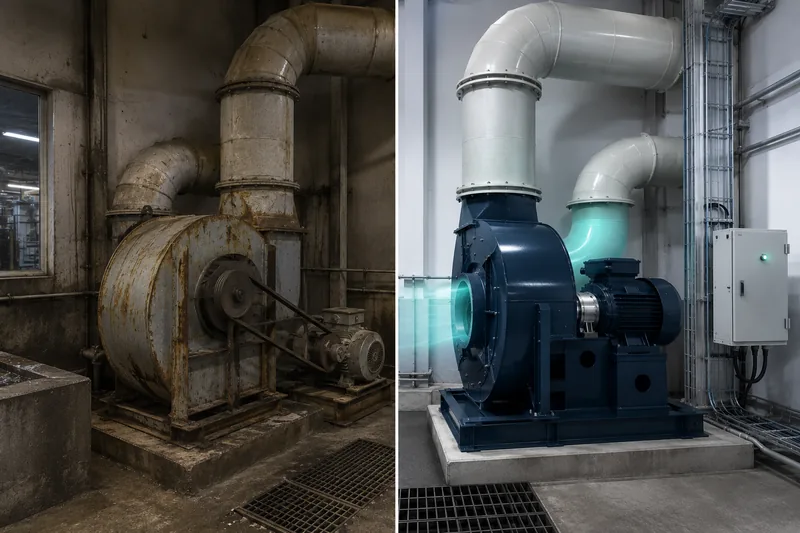
6 months · pending
4 months · pending
Three commercial models for three different concerns
We produce a full savings assessment and payback analysis before any purchase discussion. Five-year full-unit warranty, written into the contract.
Request a quote →24- or 36-month plans are negotiable, so the monthly energy savings help carry the payments (final terms per commercial agreement).
Model an instalment plan →Measured baseline, verified post-retrofit metering, and a share of the savings. Baseline, verification method and equipment ownership are all defined in the agreement.
Discuss an EMC scheme →Making sense of specification and energy saving
Send us your site parameters —
we'll show whether the retrofit pays
Leave your details and we'll prepare a preliminary savings assessment. You can also call or message us directly to arrange a site survey.
Long-press to recognise on mobile