

Dacheng
Home/Industries/Chemical
Industry solution · Chemical

Energy-saving, reliable operation for chemical waste-gas treatment

Extraction and treatment of acid, alkali and organic waste gas — corrosion resistance, continuous duty, stable flow and pressure, early warning.

Corrosion resistanceLong continuous dutyStable flow and pressureEarly warning
Process & Pain Points

Where the fan sits in your system

Typical scenario: Reactor venting, tank breathing-gas capture, whole-workshop ventilation and scrubber duty

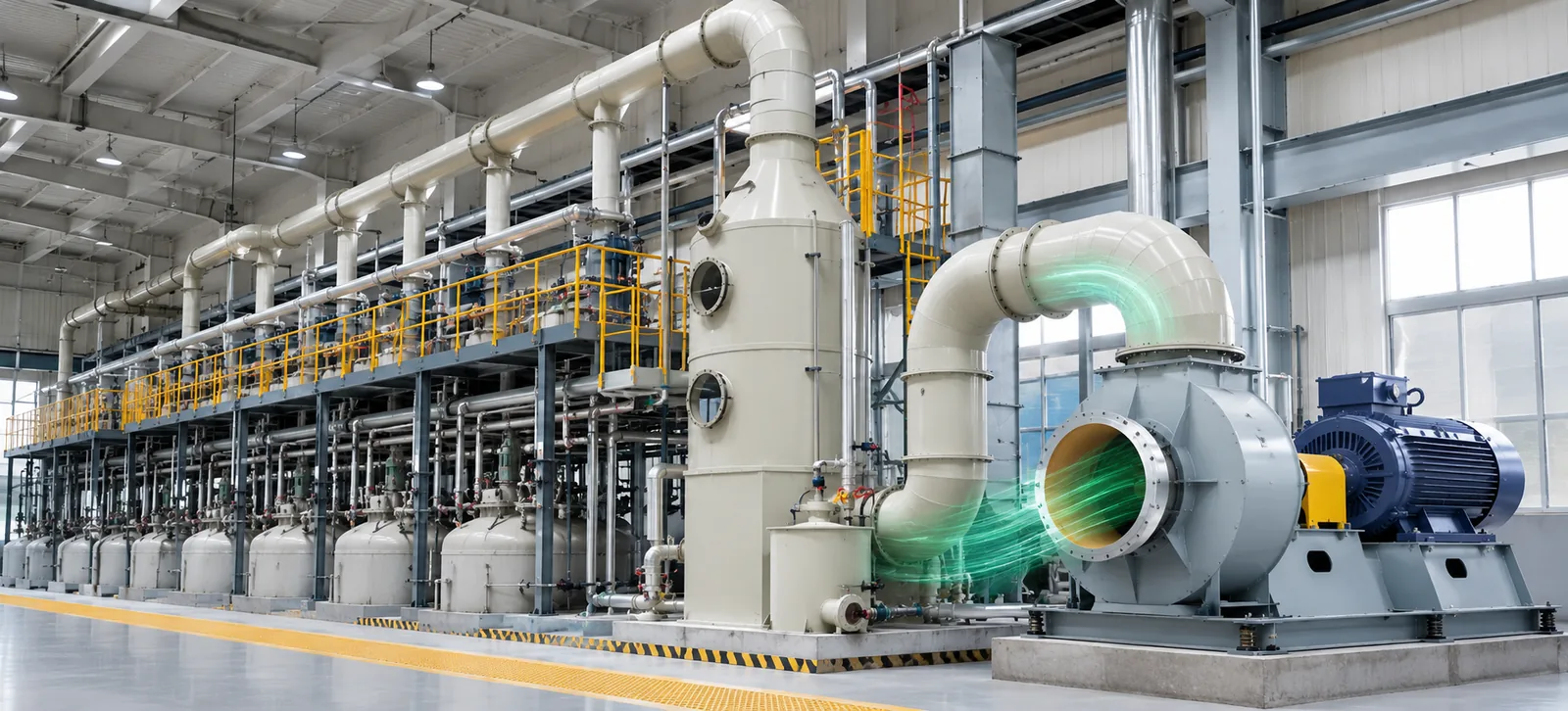
Waste gas from a chemical plant arises at the reaction, storage and transfer stages, is collected through ductwork and passed to scrubbers, activated carbon or RTO units. The fan is the power source that keeps the whole system under negative pressure at the required flow. Continuous production means the fan effectively never stops, so any stall or shutdown hits both output and emissions compliance directly.
Corrosive media shorten impeller and casing life
Year-round operation at full fixed-frequency speed consumes enormous energy
Production load varies, but airflow cannot follow
Belt-drive parts need frequent replacement and maintenance windows are hard to coordinate
Without operating data, problems are found late
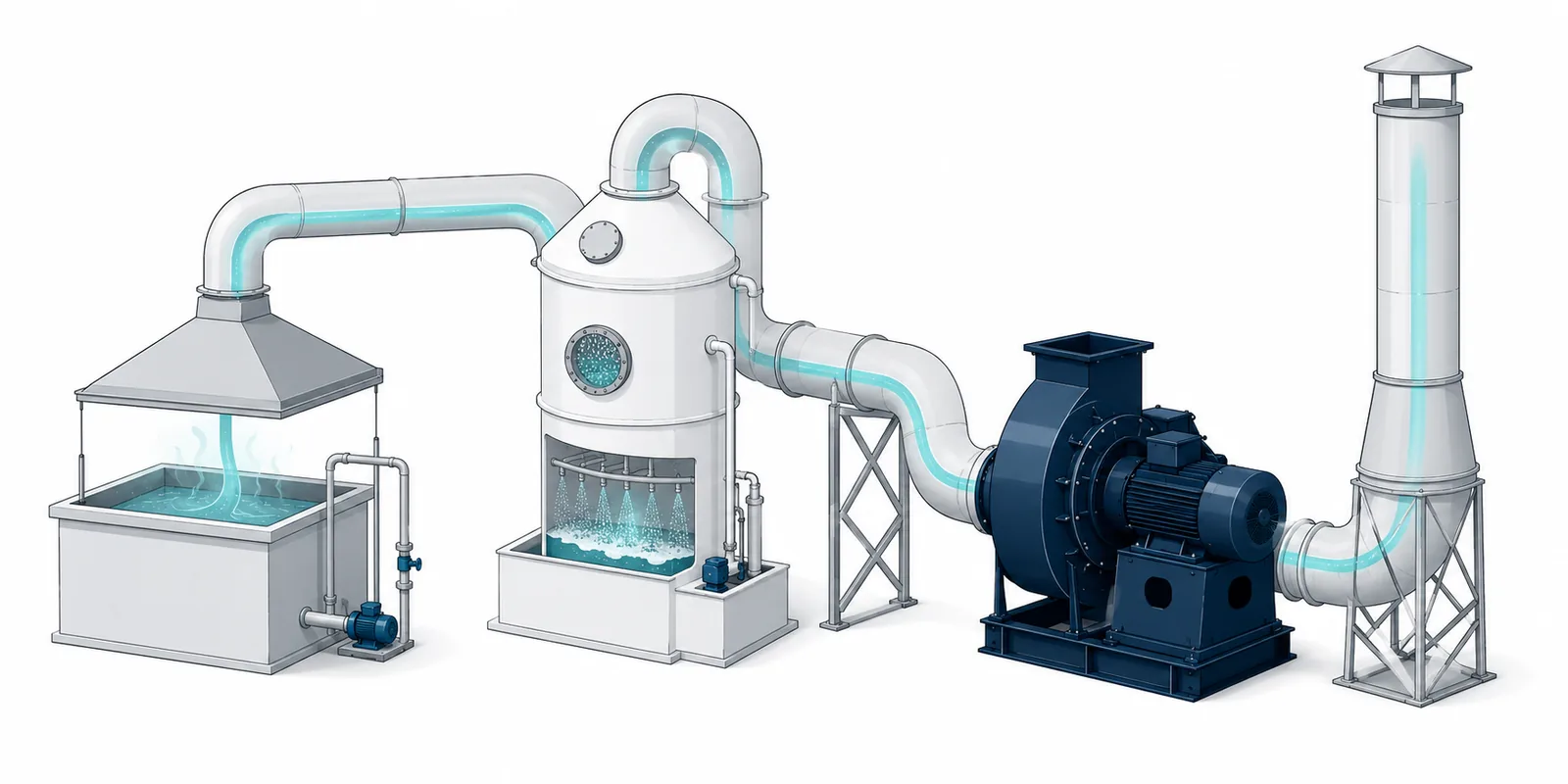
Waste-gas treatment chain diagram: capture hood, ductwork, scrubber, energy-saving fan and stack

Capture hood → Ductwork → Treatment unit → Fan → Stack (supply boundary per proposal)

Recommended Solution

Solution outline (final configuration subject to site survey)

There is no one-size-fits-all model — different conditions mean different configurations. Below is the selection framework for Chemical duty.

Model and materials
Modified-ABS engineering-plastic construction resists acid and alkali attack; final selection confirmed against medium composition and concentration
Power range
10–100 kW, calculated from duct resistance and airflow demand (subject to site survey)
Control strategy
Smart VFD follows production load; automatic turndown at night and at low load
O&M onboarding
24/7 platform monitoring with current, temperature and vibration alerts, folded into the plant inspection regime
Expected Value

Four kinds of value, subject to site assessment and measurement

Energy
Demand-based airflow under varying load removes the waste of running flat out
Reliability
Direct drive removes failure points; early warning cuts unplanned stoppages
Maintenance
No belt replacement, so fewer interventions and lower spares cost
Management
Consumption and operating ledgers generated automatically, so savings can be audited
Related caseChemical · East China (anonymised)
All case studies
FAQ

Frequently asked: Chemical

Get selection advice for Chemical

Send us your basic site parameters and we'll return an outline solution and savings estimate within 48 hours.

Call UsGet Energy Assessment