

Dacheng
Home/Industries/PCB & Electronics
Industry solution · PCB & Electronics

Stable exhaust for PCB etching and developing waste-gas capture

Etching, developing and cleaning exhaust capture — multi-process coordination, stable airflow, controlled energy use.

Multi-process coordinationStable airflowControlled energy use
Process & Pain Points

Where the fan sits in your system

Typical scenario: Local exhaust on etching and developing lines, wet-process workshop ventilation, scrubber duty

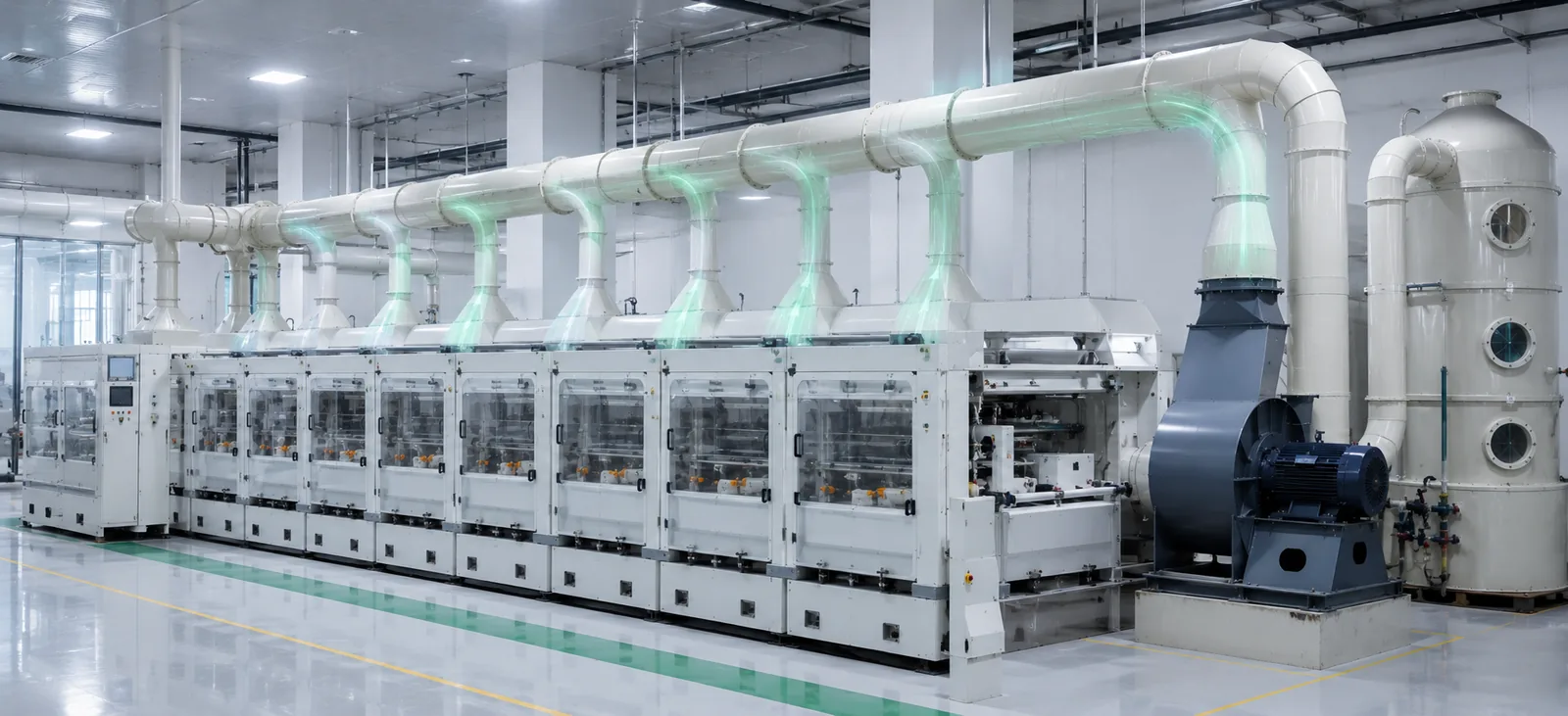
PCB wet processes share one exhaust system across several lines. Individual stages start and stop frequently, so duct pressure swings constantly. Unstable airflow affects both chemical vapour control and workshop cleanliness — and the conventional answer is simply to run flat out and absorb the swings.
Shared ductwork across lines produces large pressure swings
Line utilisation shifts with the order book, but airflow cannot follow
Alternating acid and alkali media demand more of the materials
Cleanroom areas are sensitive to noise and vibration
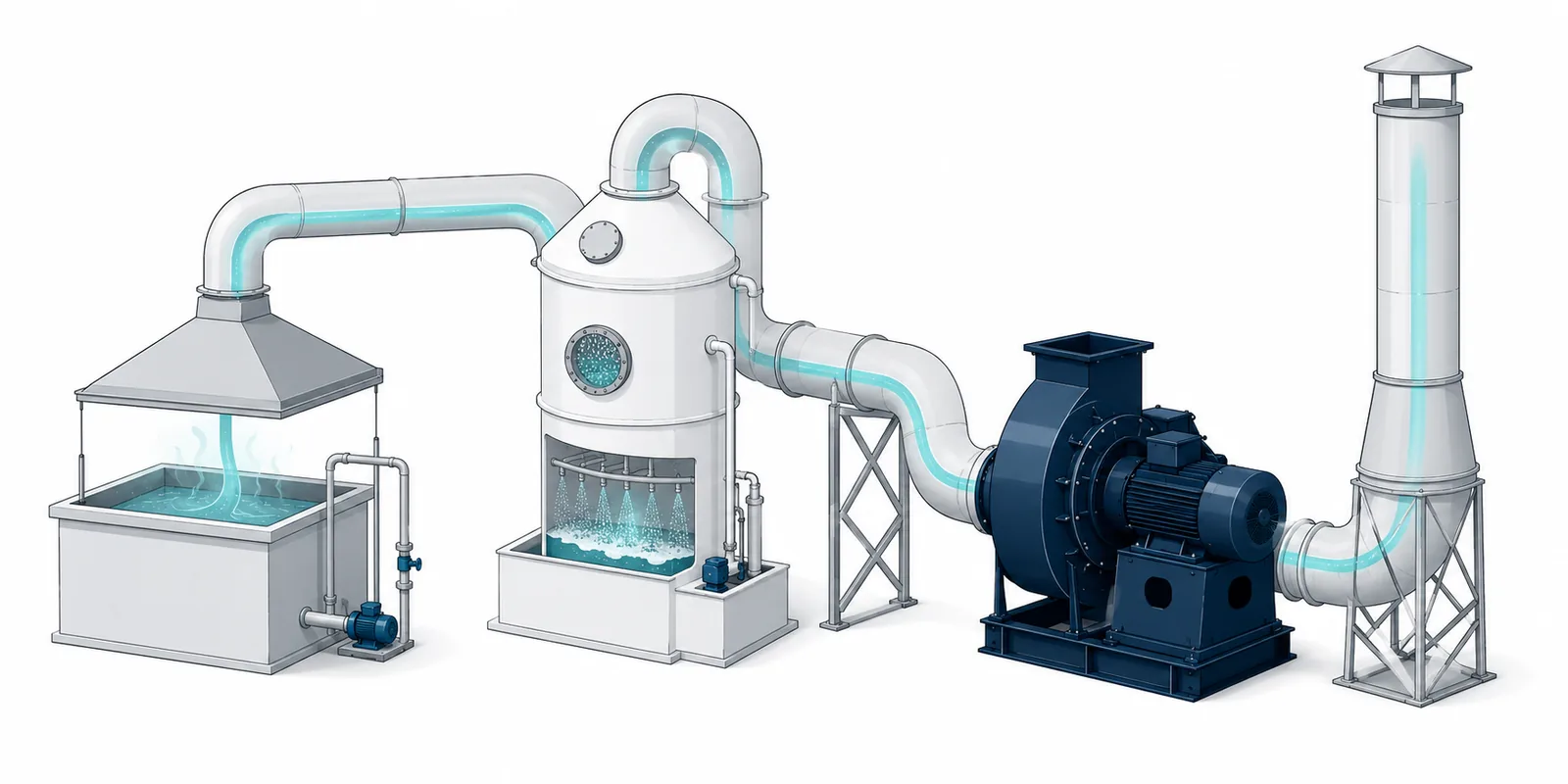
Waste-gas treatment chain diagram: capture hood, ductwork, scrubber, energy-saving fan and stack

Capture hood → Ductwork → Treatment unit → Fan → Stack (supply boundary per proposal)

Recommended Solution

Solution outline (final configuration subject to site survey)

There is no one-size-fits-all model — different conditions mean different configurations. Below is the selection framework for PCB & Electronics duty.

Model and materials
Corrosion-resistant construction with low-vibration direct drive, suited to alternating acid/alkali duty
Control strategy
Constant-pressure VFD control holds airflow steady as duct pressure fluctuates
Multi-unit coordination
Fans start, stop and modulate together according to how many lines are running
O&M onboarding
Per-line exhaust data recorded, supporting workshop-level energy allocation
Expected Value

Four kinds of value, subject to site assessment and measurement

Energy
Automatic turndown when few lines are running, instead of full speed all year
Reliability
Constant-pressure control keeps capture consistent across every process stage
Maintenance
No belt wear parts, so fewer maintenance entries into clean areas
Management
Per-line data makes energy anomalies quick to locate
Related casePCB · South China (anonymised)
All case studies
FAQ

Frequently asked: PCB & Electronics

Get selection advice for PCB & Electronics

Send us your basic site parameters and we'll return an outline solution and savings estimate within 48 hours.

Call UsGet Energy Assessment